Caño Island Biological Reserve is one of the finest scuba diving destinations on the Costa Rica – Pacific coast. Certified divers can choose 2 or 3 guided dives inside the reserve, led by local experts with 15+ years in these specific waters. Direct departure from Drake Bay.
+ 15 Years in Drake Bay
Two or three dives spots with local guides
Groups Max 6 Divers
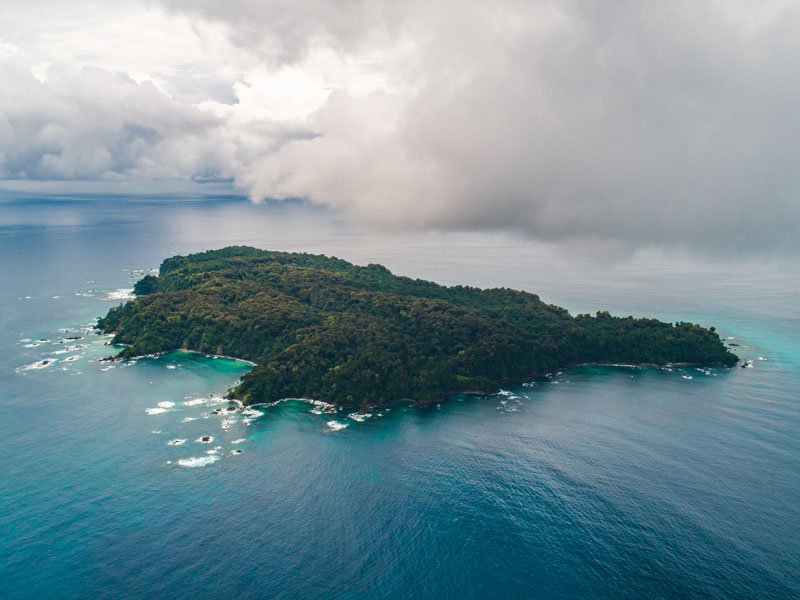
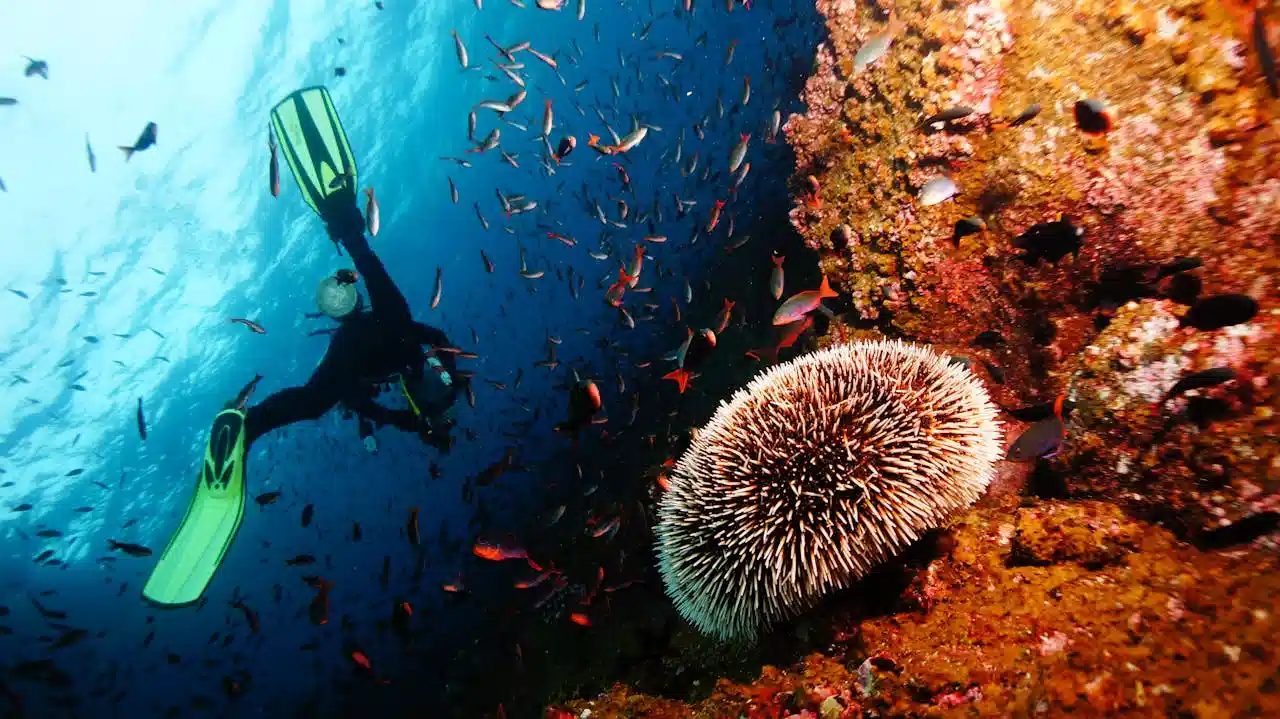
Scuba diving at Caño Island is the dive you will remember longest if you’re coming to Costa Rica. Leaving Drake Bay with our team, Caño Island is 20 kilometres away, 45 minutes across open Pacific water. It sits in the most biodiverse region on the planet, where cold deep-water upwellings collide with warm tropical shallows. That collision of currents creates an explosion of marine life unlike anything else on this coast. Caño Island has been a biological reserve since 1978, with fishing prohibited without exception. That absolute protection has built the most intact marine ecosystem you will find on any single dive: sharks, manta rays, schools of hammerheads, sea turtles, whale sharks in season, a complete food chain from the reef floor to the open water above you. Scuba diving at Caño Island ranks consistently among the top dive destinations in the Eastern Pacific.
What to Expect on a Guided Dive Day at Caño Island
What You'll See Scuba Diving at Caño Island
Caño Island’s protected status since 1978 means the marine life here has had decades to recover without pressure. What you encounter underwater is not curated or seasonal — it is what lives there. These are the species you are most likely to see on a guided dive.
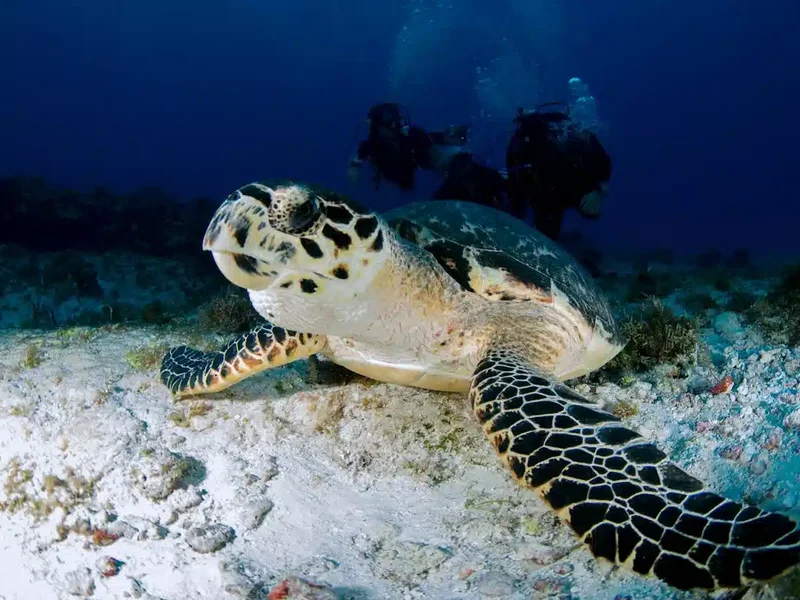
Sea Turtles
Green and hawksbill turtles move through the reef at close range. Common at most sites — often resting on the bottom or surfacing right above the group during the dive.
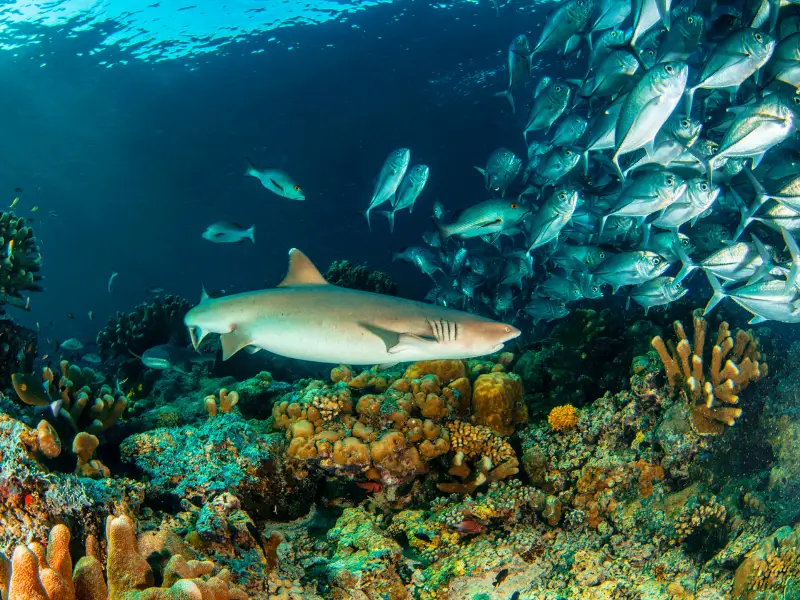
Whitetip Reef Sharks
Rest on the sandy bottom between 8 and 18 metres. Seen on 9 out of 10 dive trips. Completely relaxed around divers, reliable sightings at Bajo del Diablo and La Cueva.
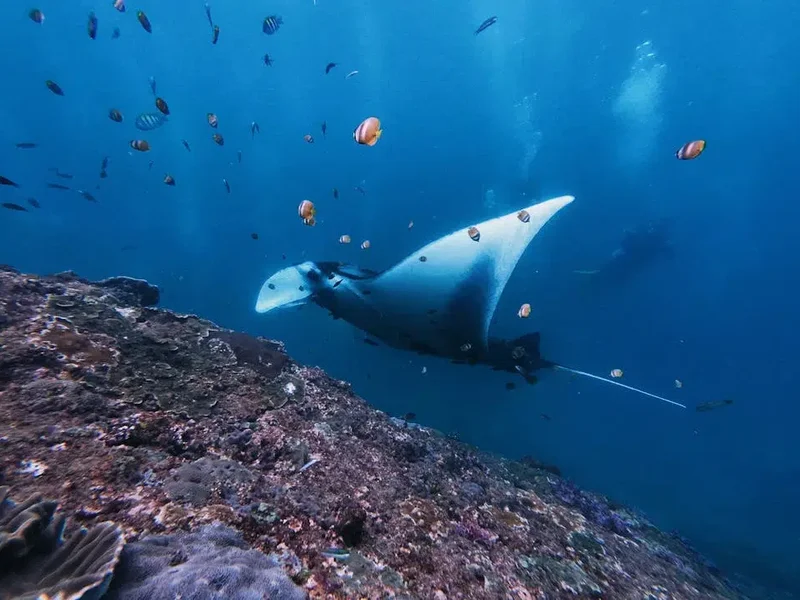
Manta Rays
Up to 3 metres across. Oceanic mantas pass in groups, wings overlapping mid-water. Sightings are unpredictable but more frequent from May to November as plankton rises.
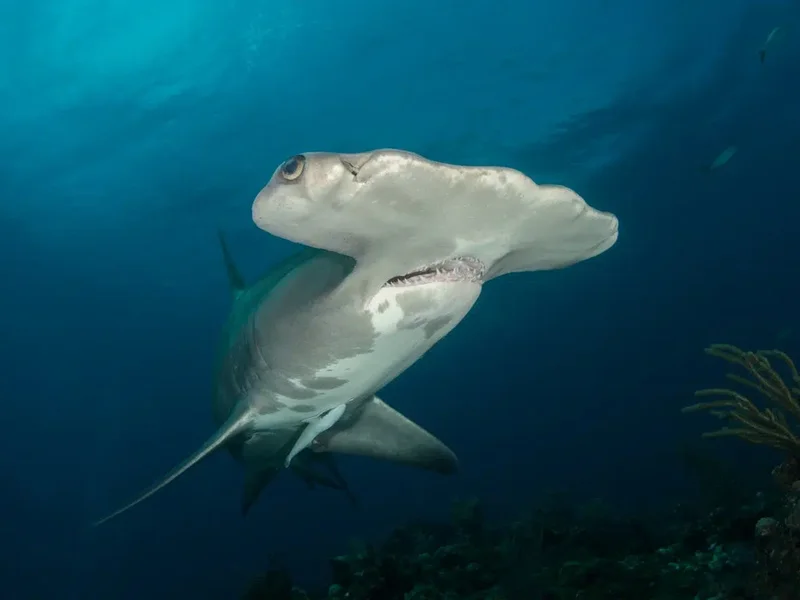
Hammerhead Shark
Scalloped hammerheads move through deeper sites (20–35 m) from July to October. Bajo del Diablo and El Arco are reliable spots, typically in schools of 3–8 individuals.
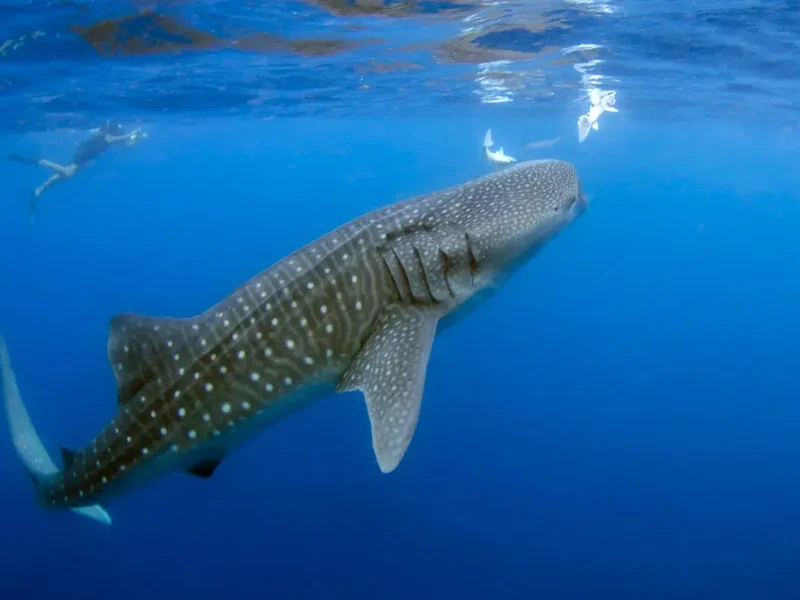
Whale Sharks
Occasional but documented at Caño Island, particularly May–October when plankton density peaks. The largest fish on the planet , up to 12 metres. A surface encounter or a blue-water dive with one is among the rarest experiences in the reserve.
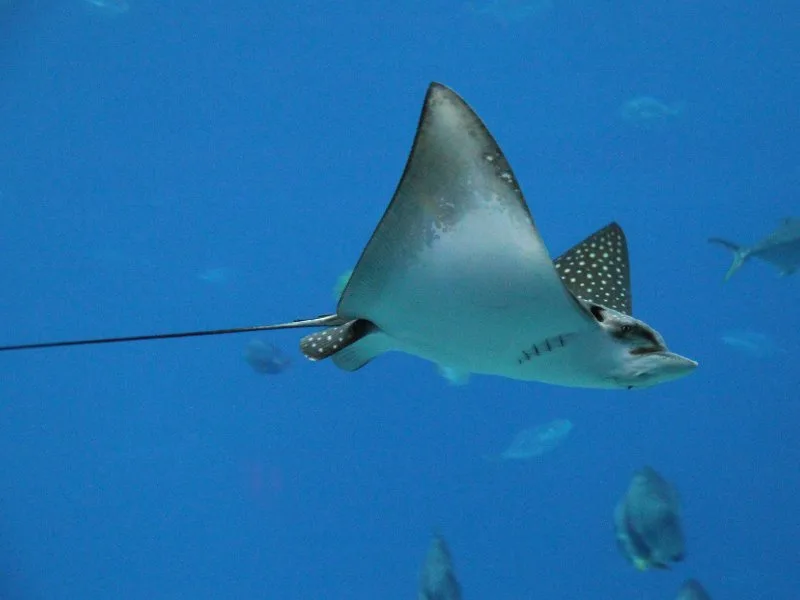
Eagle Rays
Spotted eagle rays cruise mid-column in pairs or small groups, often crossing between you and the surface. One of the most elegant sightings in the reserve, common at Bajo del Diablo and El Ancla.
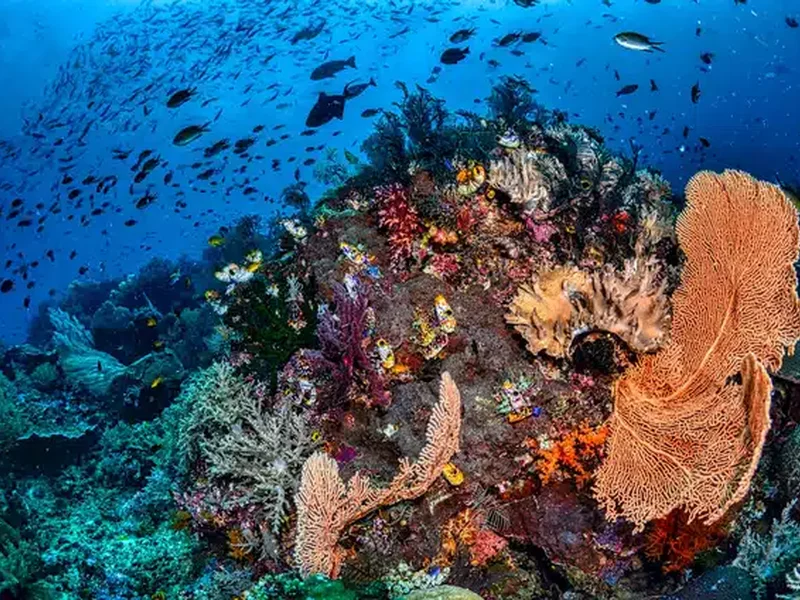
Tropical Fish Schools
No fishing since 1978. The fish have no fear of divers. Dense schools of parrotfish, snapper, and barracuda move through the group. At some sites the visibility drops temporarily as the school surrounds you.
Humpback Whales
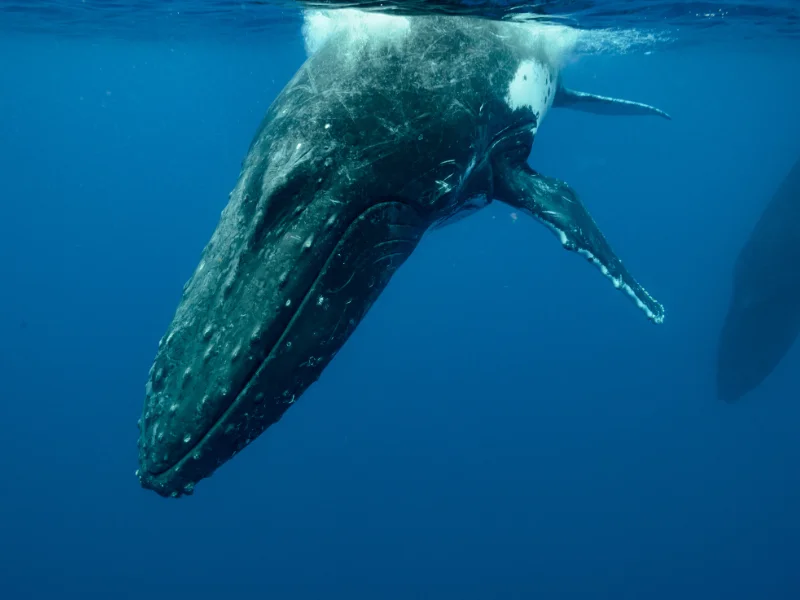
July to October. The boat crossing to Caño Island passes directly through active humpback whale nursery grounds. Drake Bay is one of only two places in the world where northern and southern hemisphere populations visit the same waters.
When to Dive at Caño Island: Month by Month.
What to expect in the water, month by month. There is no bad time to dive here — only better and best.
Species / Condition
Jan
Feb
Mar
Apr
May
Jun
Jul
Aug
Sep
Oct
Nov
Dec
🦈 Whitetip Reef Sharks
🐢 Sea Turtles
🦅 Eagle Rays
🐟 Manta Rays
🦈 Hammerhead Sharks
🐳 Humpbacks (S. Hemisphere)
🐳 Humpbacks (N. Hemisphere)
👁 Visibility
🌊 Sea Conditions
Peak season Common / Good Occasional / Average Rare / Difficult
7:00 AM
📋
Meet at the Dock
Equipment check and dive briefing. Guide covers the day's sites, conditions, and what you'll likely see.
~30 min
7:30 AM
🚤
Boat to Caño Island
40-minute open-water crossing. Dolphins spotted regularly. Humpback whales common oct-jul.
~40 min
8:30 AM
🤿
First Dive
Site briefing at anchor, then into the water. First dive: 45–55 minutes. Depths 12–25 metres by site.
45–55 min
11:00 AM
🍊
Surface Interval
Water, fruit, and snacks on deck. Debrief on the first dive and full briefing on the second site.
~30 min
12:00 PM
🦈
Second Dive
Second guided dive at a different reef site. New terrain, new species, each site at Caño is unique.
45–55 min
1:30 PM
🍽️
Lunch at the Beach
Lunch at a nearby beach on the Osa Peninsula, accessible only by boat and included in your trip.
~1 hr
2:00 PM
🏝️
Back to Drake Bay
Return crossing to Drake Bay. Back by 14:00 — the rest of the day is completely yours to enjoy.
~40 min
7:00 AM
📋
Meet at the Dock
Equipment check and dive briefing in Drake Bay.
~30 min
7:30 AM
🚤
Boat to Caño Island
Watch for dolphins and humpback whales on the crossing.
~40 min
8:30 AM
🤿
First Dive
Site briefing at anchor. 45–55 min at 12–25 metres.
45–55 min
11:00 AM
🍊
Surface Interval
Water, fruit, and snacks on deck. Briefing for the second site.
~30 min
12:00 PM
🦈
Second Dive
Different site — new terrain and species.
45–55 min
1:30 PM
🍽️
Lunch at the Beach
Included lunch at a nearby beach. Accessible only
📌 If you choose the 3-tank option, the day may run a couple of hours longer. Times are approximate and may adjust to sea conditions. Safety takes priority over schedule.
Your Dive Day at Caño Island: Step by Step
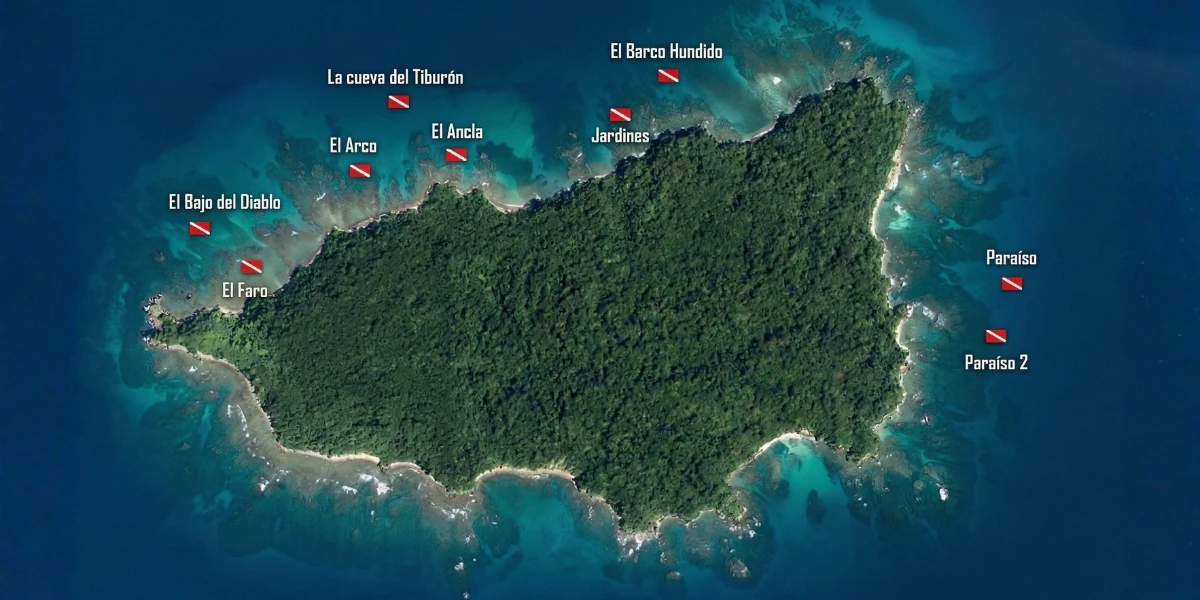
Caño Island Scuba Diving Sites: Where to Dive
Nine documented dive sites inside the reserve, each with a different character, depth range, and resident species. Your guide selects two or three on the day based on current conditions and your certification level..
Bajo del Diablo
15–40 m depth
Intermediate+
Volcanic pinnacles rising from the deep. The strongest currents in the reserve, with the highest concentrations of large pelagic species. Whitetip sharks, eagle rays, and the occasional hammerhead.
El Ancla
10–25 m depth
All levels
Named after a colonial anchor found at depth. Colourful coral heads, dense fish life, and reliable sightings of sea turtles and rays in calm, sheltered water.
Jardines
8–18 m depth
All levels
Soft coral and gorgonians covering a gentle slope. Low current, excellent visibility, and a regular concentration of hawksbill turtles that feed right in front of you.
El Barco Hundido
12–22 m depth
All levels
Named "the sunken boat", though there is no wreck. What you will find: enormous schools of grunts and snapper, giant groupers, resident whitetip sharks, manta rays, and sea turtles.
La Cueva del Tiburón
12–25 m depth
Intermediate
A cave and overhang system where whitetip reef sharks rest during the day. Multiple sharks in the same enclosed space, one of the most memorable sightings in the reserve.
Paraíso
6–20 m depth
All levels
The most diverse reef in the reserve. Parrotfish, moray eels, sea turtles, and enormous schools of snapper. Ideal as a second dive: calm water, excellent light.
El Faro
15–25 m depth
Intermediate
A dramatic rock formation on the island's southwest tip, centred on a natural arch at 18 m. Coral-encrusted walls, whitetip sharks patrolling the base, and dense schools of jacks sweeping through with the current.
El Arco
18–40 m depth
Experienced
A rock arch at 30 metres. Strong current, blue water, and hammerhead sightings on good days. Maximum depth requires Advanced certification. One of the most dramatic dives in the reserve.
La Esfera
15–35 m depth
Experienced
Named after the pre-Columbian stone spheres found on the island. Deeper terrain with surge. Best site for open-water manta ray encounters and large amberjack schools.
Certified Diver Guided Dives
$155 – $210
Limited spots, Book NOW!
Only 20 spaces available per day to ensure a personalized experience.
Two ocean dives at Caño Island Reserve
PADI Instructor by your side at all times
All-inclusive: Full gear, fees & boat transport
Beach lunch at Playa San Josecito
What’s included
Drake Bay sits on the Pacific coast of Costa Rica at a unique convergence point. The Southern Hemisphere population arrives from Antarctic feeding grounds from July to October. The Northern Hemisphere population arrives from California and Mexico from December to March. The same bay. Two separate migrations. Almost year-round whale activity.
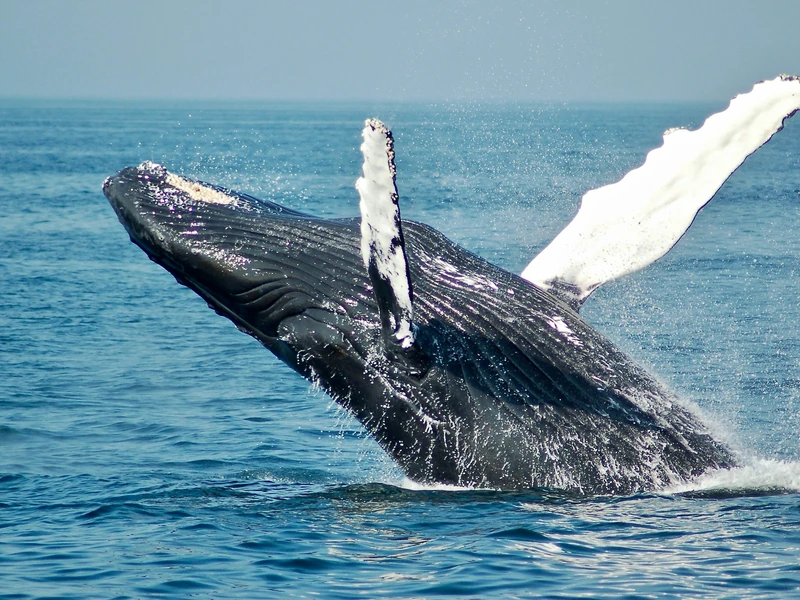
The 40-minute crossing to Caño Island passes directly through active whale territory. Before you enter the reserve, you are already inside one of the most remarkable marine wildlife corridors on the planet. Surface breaches, pec slapping, and mother-calf pairs are common from the boat. On still days, humpback songs are audible underwater during the dive.
2 Separate whale populations visiting the same bay. 8 months Combined whale season per year.
Humpback Whales in Drake Bay: Two Migrations, Almost Year-Round
Season Boxes Preview
Southern Hemisphere
July – October
Breeding and nursery grounds. Mother-calf pairs are common. Peak: August–September.
Northern Hemisphere
December – March
Feeding migration heading south. Groups of 3–5 adults. Peak: December–January.
▪️ 2 or 3 guided dives at different sites: every dive is at a different location inside the Caño Island Biological Reserve, depending on your chosen pack.
▪️ Maximum 4 divers per guide — not 8, not 12. You dive in a small group with full attention from your guide.
▪️ 15+ years in these specific waters, we know which sites produce the best encounters, and we adapt every day to conditions.
▪️ Direct departure from Drake Bay — the shortest crossing to the reserve. No transfers, no wasted time.
▪️ PADI Dive Resort — a certification that covers equipment standards, trained professionals, and safety protocols. Not every operator in Drake Bay holds it.
Why Choose Drake Divers for Your Caño Island Dives
What's Included in Your Caño Island Dive Trip
🌊
2 or 3 Guided Dives
Two dives at two separate reef sites inside the reserve. Upgrade to three dives for a third site.
🤿
Full Scuba Equipment
BCD, regulator, wetsuit, mask, fins, tank and weights. Fitted and checked on board before each dive.
🎓
Expert Dive Guide
Your PADI-certified dive guide leads a maximum of 4 divers per trip. Safety and attention included.
🚤
Boat Transfer
Round-trip from Drake Bay to Caño Island — 40 minutes each way. No departure from Sierpe required.
🏝️
Reserve Entrance Fees
All Caño Island Biological Reserve and national park fees included. No extra charges on arrival.
📋
Dive Briefing at Every Site
Full briefing at anchor before every dive: site layout, depth, expected marine life and protocol.
🍊
Snacks & Hydration
Water, fresh fruit and snacks on deck during the surface interval between dives. Included in price.
🍽️
Lunch at the Beach
Full lunch at a nearby beach on the Osa coast, accessible only by boat. Included in both options.
2-tank dive: $155 | 3-tank dive: $210 No hidden costs. Equipment, boat, reserve entrance fee, and lunch included.
What You Need to Bring to Scuba Dive at Caño Island
Required to dive inside the Caño Island Biological Reserve. Bring these on the day or send them to us when you book.
Certification Card
Valid diving certification from any recognised agency: PADI, SSI, NAUI, CMAS or equivalent. Physical card or digital version accepted. No certification on the day means no dive.
Dive Log
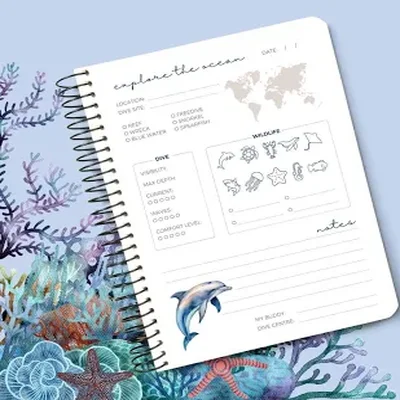
Paper or digital. We check that your recent dive history suits the sites selected. If your last dive was over 12 months ago, a refresher dive is recommended before the day.
Medical Declaration
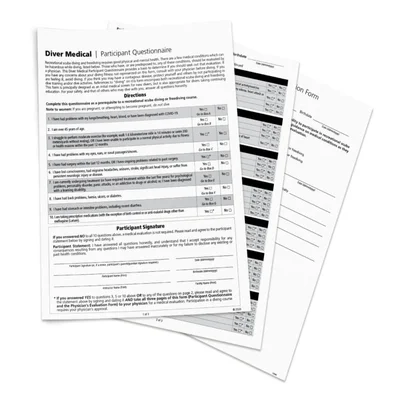
Standard PADI medical form, completed and signed. Available in advance or on arrival. Certain conditions require a doctor’s clearance letter. Contact us if unsure.
Dive Insurance
DAN or equivalent dive accident cover is strongly recommended. The nearest hyperbaric chamber is in San José. Without insurance, evacuation costs can be very significant.
In our Google reviews, we are one of the highest-rated dive centers in Costa Rica. Our community highlights our organization, professionalism and the personal touch that makes us unique. connection to this corner of Costa Rica — that’s what makes Drake Divers different.
[trustindex no-registration=google]
Why Drake Divers Is the Right Choice for Your Caño Island Dives
Certified Diver Guided Dives
$155 – $210
Limited spots, Book NOW!
Only 20 spaces available per day to ensure a personalized experience.
Two ocean dives at Caño Island Reserve
PADI Instructor by your side at all times
All-inclusive: Full gear, fees & boat transport
Beach lunch at Playa San Josecito
What’s included
Any open water certification from a recognised agency is accepted: PADI, SSI, NAUI, CMAS, or equivalent. You must bring your certification card (physical or digital) on the day. Without it, we cannot take you diving inside the reserve — it is a legal requirement.
No. All equipment is included: wetsuit, BCD, regulator, tank, mask, fins, and weights. If you prefer to use your own gear, you are welcome to — just let us know in advance. We ask that all personal regulators have a current service record..
The 2-tank option includes two guided dives at two separate reef sites, with a surface interval between them. The 3-tank option adds a third dive at a third site, which is typically the deepest or most exposed site of the day. The 3-tank option is best for experienced divers who want to maximise time in the water.
Depths vary by site and by your certification level. The typical range is 12–25 metres for most dives. At sites like Bajo del Diablo or El Arco, depths can reach 30–40 metres for Advanced-certified divers. We never exceed your certification limits.
Yes. Nitrox (Enriched Air) is available for an additional fee. You must hold a valid Enriched Air certification to use it. Nitrox is particularly useful on the 3-tank option, where extended bottom times at depth can approach no-decompression limits on standard air.
Yes, but we strongly recommend booking a refresher dive with us the day before your Caño Island trip. A 45-minute skills review in calm, shallow water near Drake Bay will rebuild your confidence and ensure you get the most from your dives at the reserve. Contact us and we will arrange it..
Every month has something to offer. December to April brings the best visibility and the calmest sea conditions. May to November brings more marine life — manta rays, hammerhead sharks, and humpback whales (July–October). There is no bad time to dive here, only different reasons to come..
Drake Bay is remote — and that is precisely why the diving is exceptional. You can fly from San José in 35 minutes with Sansa, or take a boat from Sierpe (1.5 hours). We are happy to advise on logistics and can coordinate with local lodges for transfers on request.
Call or message us directly. Talk to one of our local dive guides. We’ll tell you which sites are running, what’s been sighted recently, and which dive package fits your level and schedule.